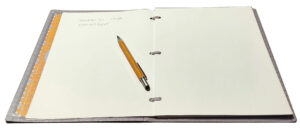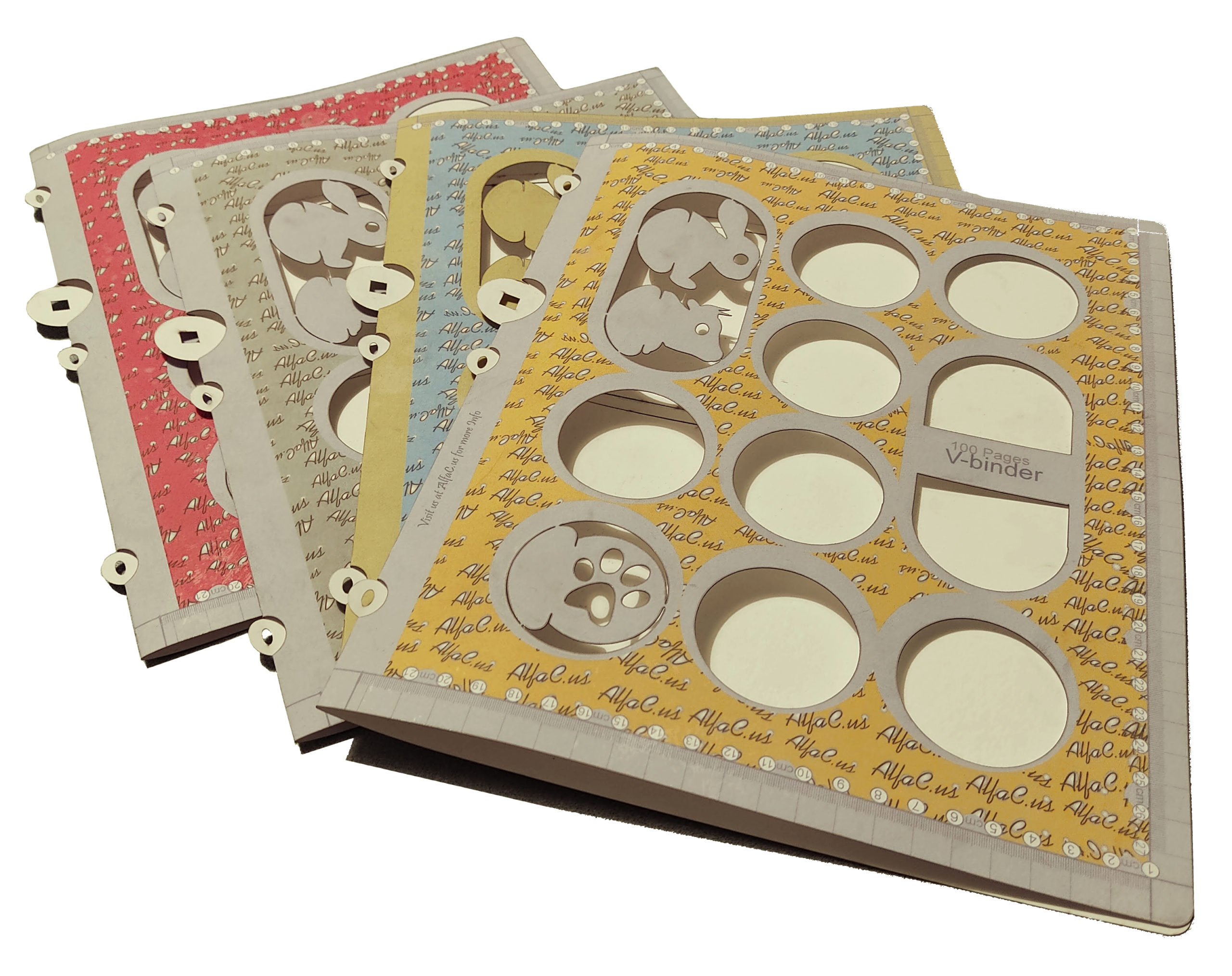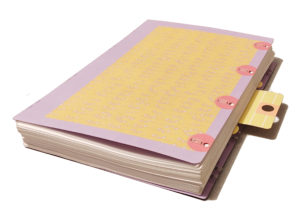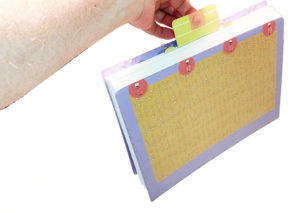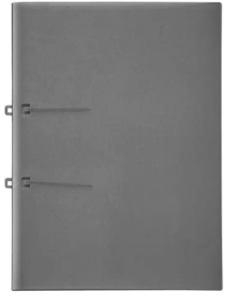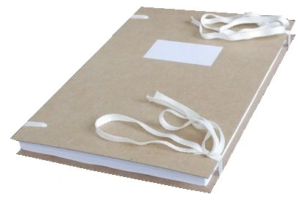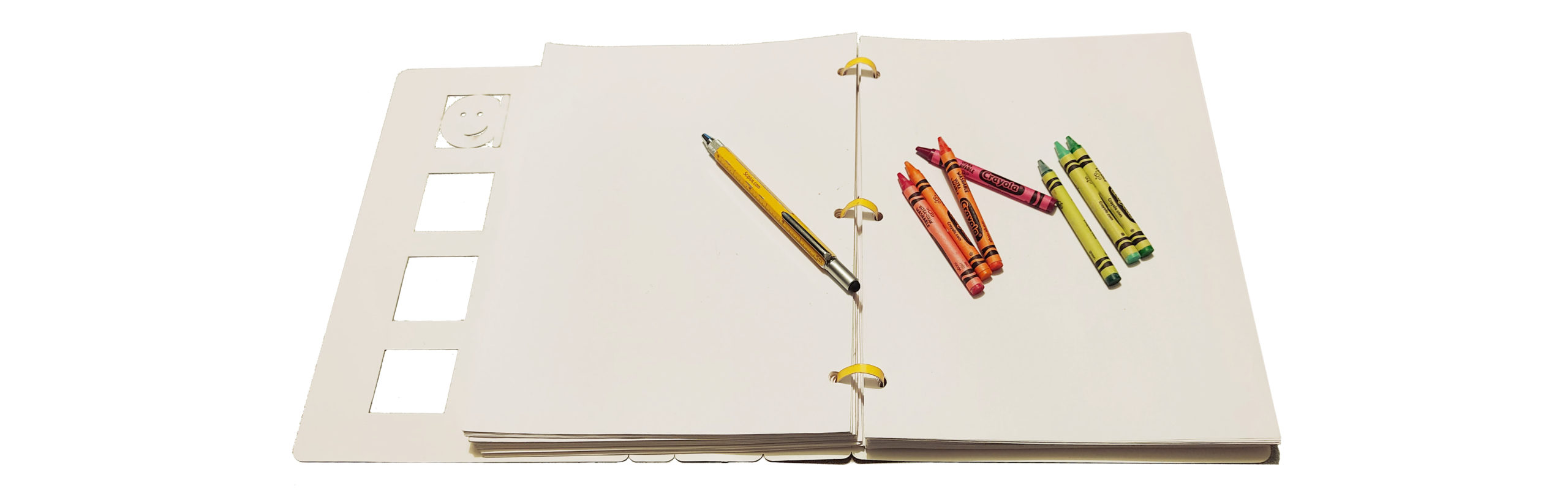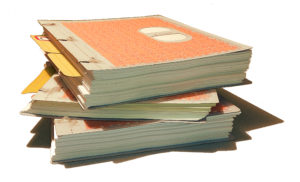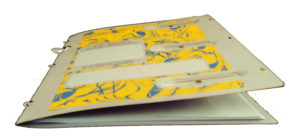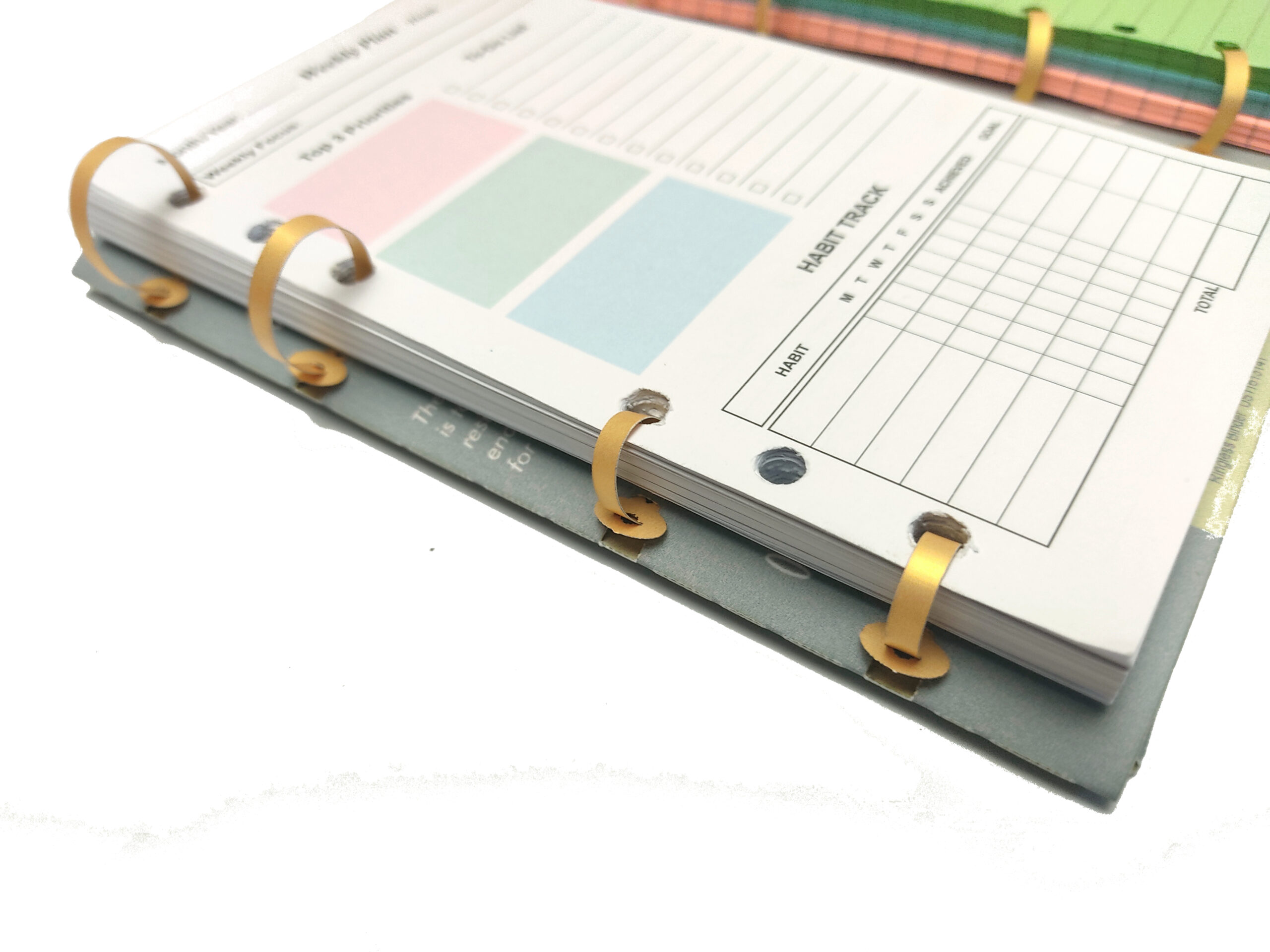
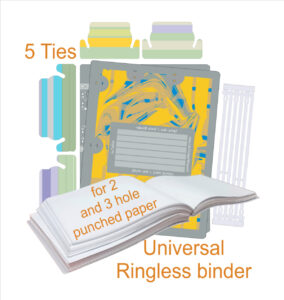
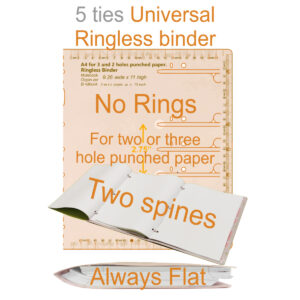
A tie-bound folio is a Ringless Binder that replaces traditional metal rings and clunky spines with flexible ties. This design allows the binder to lie completely flat like a notebook, reducing its weight by eliminating heavy hardware. Perfect for bullet journaling, sketching, or organizing.
This minimalist alternative lets you expand capacity effortlessly while keeping your documents perfectly protected.
- Snag-Free: No metal rings mean your pages turn smoothly without tearing.
- Expandable: Easily adjust the tie closure to hold a few sheets or a massive stack.
- Lay-Flat Design: Opens completely flat for seamless writing and drawing.
- Eco-Friendly Materials: Crafted from durable, tear-resistant paper.
Is it the punch-less binder? A binder with clips or a box with sticking-out posts may be handy for storage, but completely unusable when you try to flip or read the pages.

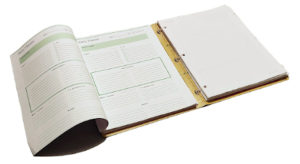
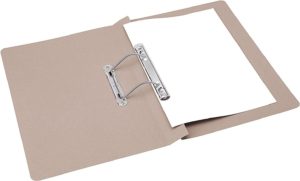
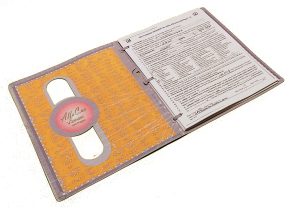
The punchless binder sports a spine with a metal clamp that holds a limited number of pages. Maybe handy for quick release, but still presents a bulky spine.
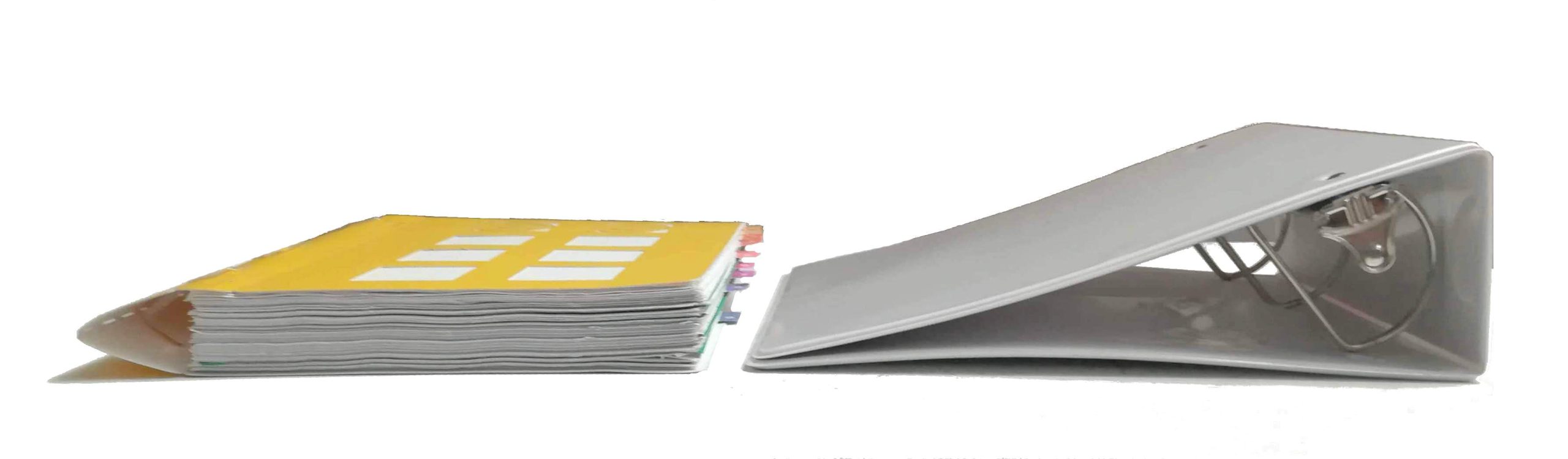
A ring binder at least has a slope of the cover evenly descending from the spine to the opening
Punchless presents a bulky shape just by the spine. The covers are flat, but the spine makes it even more difficult to store a stack of them than the ring binder. It seems that the cover consumes more storage space than the paper it is meant to hold.
The punchless crowd still pollutes with plastics.
Amazon, thanks to its marketing power, grabs the first position on the search page, shamelessly showing Ring binders when you click the “Ringless” link.
Then the punchless crowd is showing up. So they do not believe that punchless is ringless since the Ring Binder shows first.
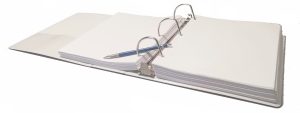
The main aliments of the Ring binder are: 1) fixed dimension of the rings
2) Huge cover spine. 3) The brick-like personality prevents it from serving any other use than storage.
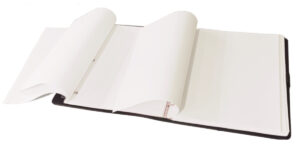
The true Ringless Binder gets rid of all the problems
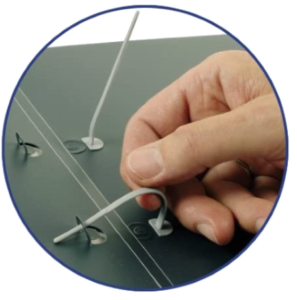
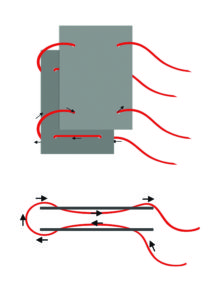
1) Is FLAT. As thick as the thickness of the tear-resistant paper is made from, and it increases only as the thickness of the pages inside. It accomplishes it by using similarly flat, flexible ties cut from tear-resistant paper or material not thicker than the paper
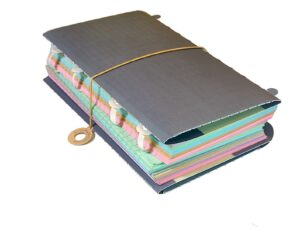
2) Is capable of keeping inside an almost unlimited number of pages.
The only limits are the length of the ties and the practicality of hauling around 1000 pages or more.
The basic tiny version, cut from a single sheet of paper, binds up to 350 pages
There is no sticking-out mechanism clamping on the ties.
Everything is accomplished by employing the characteristics of the paper we all know.
Even a child in first class learns that a sheet of paper can support a bridge when rolled in a tube. That’s what the smart designer used here.
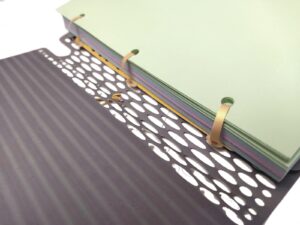
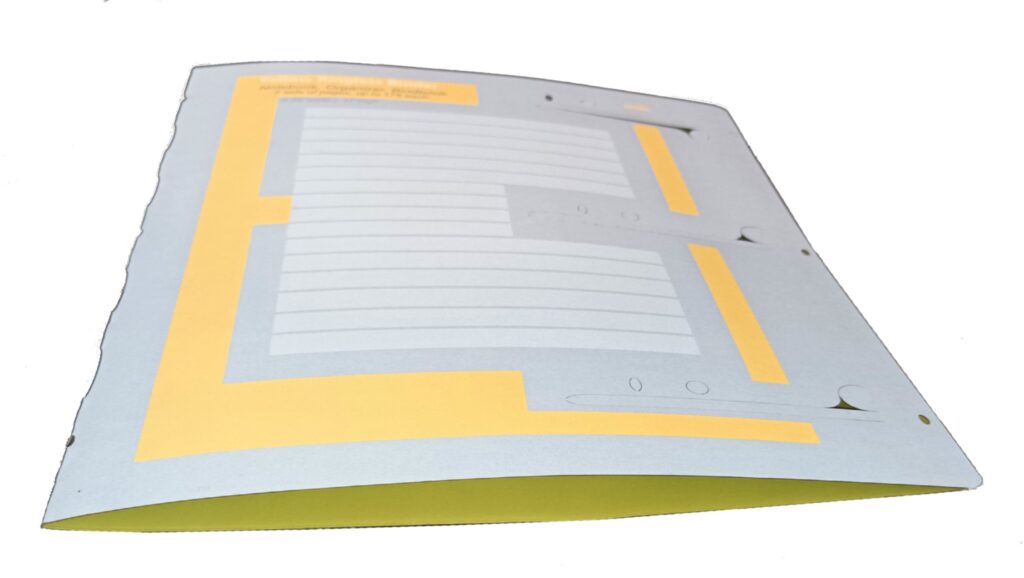
Ringless binder, when empty, is hard to notice. Just two plain flat covers.
As a true hero, it shows its power only when fulfilling a task.
No is not available on Amazon. No fuss—there is just a billionaire covering it up with an avalanche of so so devices.
Ringless binder means freedom from the constraints of spellbound minds.
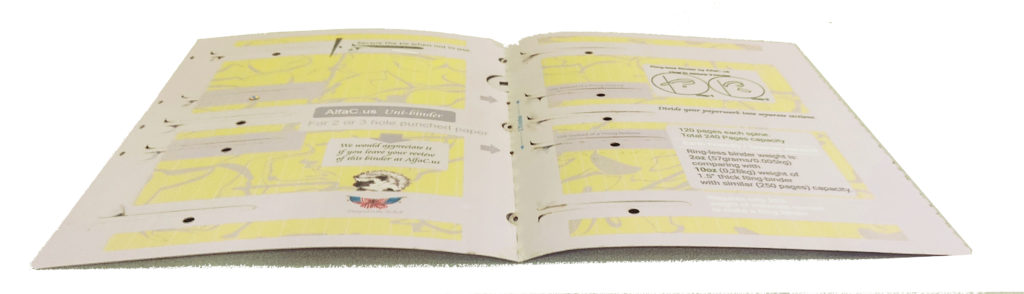
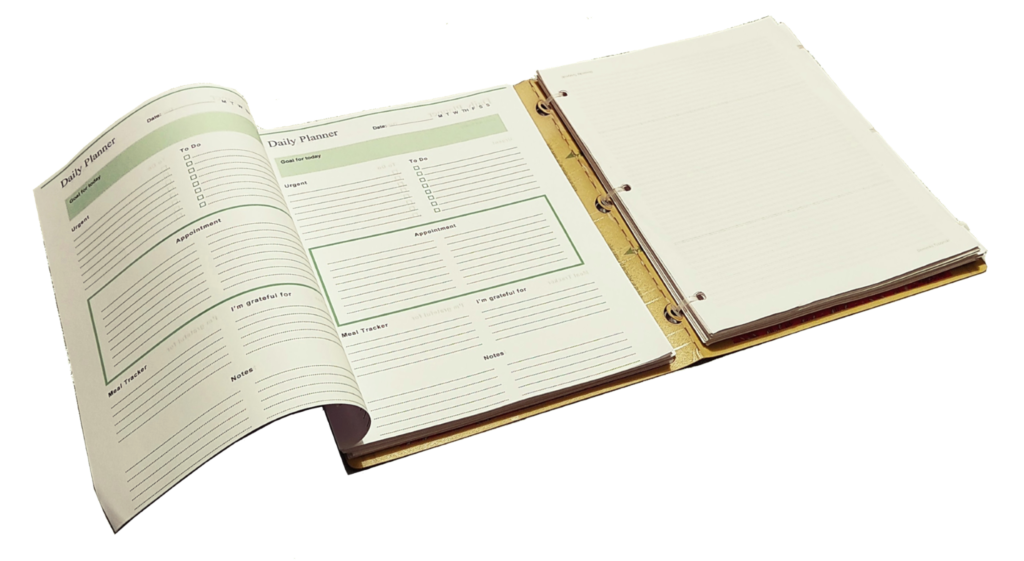
 But there is a Ring-less binder developed in Chicago. It contains no metal parts of any sort visible among competing solutions. Cut from a flat sheet of reinforced paper. No sticking out pieces, rings, or prongs. Nothing can hurt your fingers, and it binds any number of leaflets effortlessly. One universal size replaces the usual selection of ring binders designed for a specific number of sheets.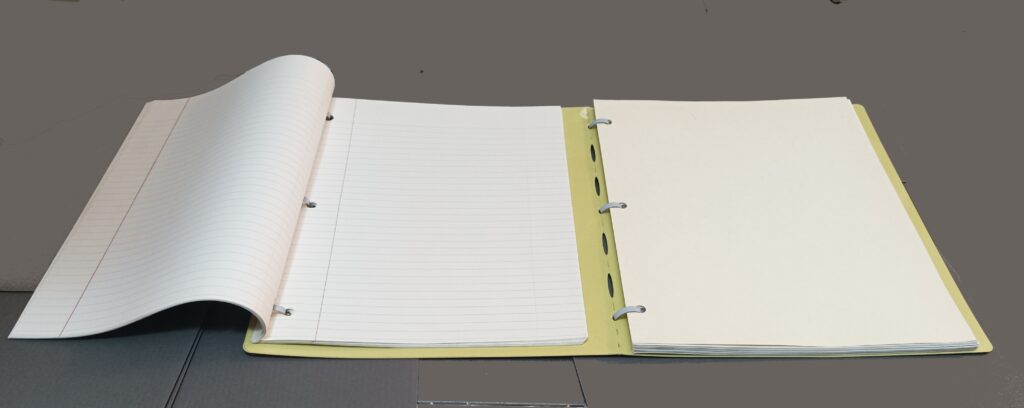
 I know well the plight of independent inventors in the US.
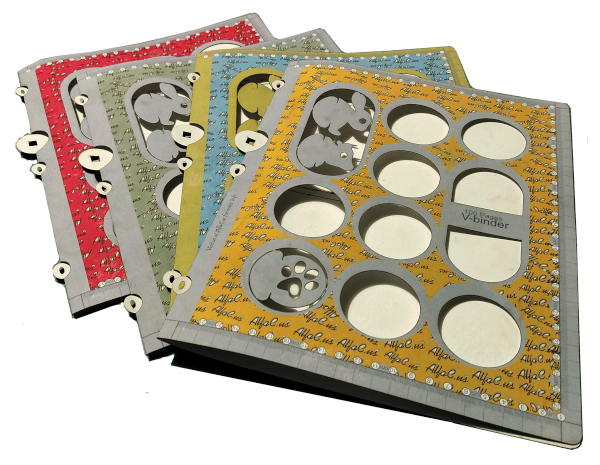
 Cute Binders for school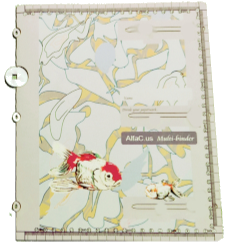
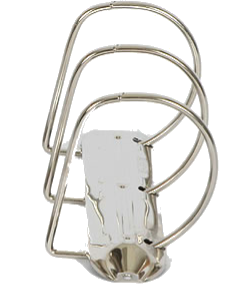
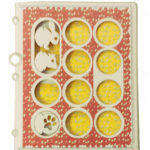
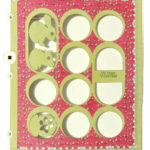
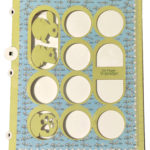
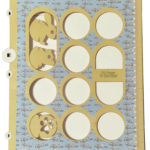
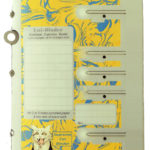
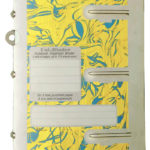
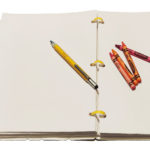
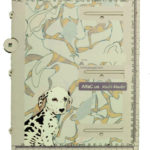
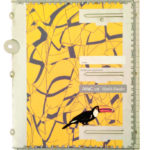
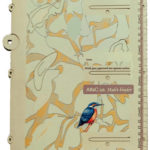
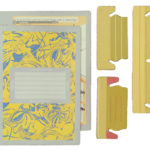
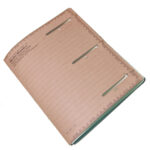
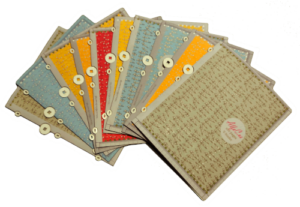

 List is No doubt a “Ring-less Binder”. The ribs, Pardon, Rings of the Dinosaurs Rex of the office world are always in the way of fingers trying to write or reach the opposite page and everybody wants to get rid of them.